Faceless channels are where creators from YouTube, TikTok, Instagram, and other video platforms flock. They eliminate the need for on-camera presence. They are also compatible with narration-led storytelling and flexible production. But even with regular publishing, there is planning and scripting, editing, branding, and platform adaptation to do. With AI-powered video creation and editing tools, Pippit makes these tasks easy. It streamlines the video creation process and transforms concepts, prompts, and media into refined video productions. A structured process also helps to ensure quality and makes publishing more efficient.
Why Faceless Channels Continue to Thrive in the AI Content Era
For creators who prioritize privacy, flexibility, or narration-driven storytelling, faceless channels can be the preferred approach. An AI movie workflow enables scalable production, without the need for cameras, sets, or repeated film shoots. Explainers, documentaries, how-to videos, stories, and list videos can be made without a presenter. AI also works in the organisation of repetitive production tasks. This frees up more time for research and creative direction. Consistency is important because viewers know that if they have a familiar format, pace, visuals, and publishing schedule, then it’s a safe bet that it’s a show they will enjoy. Regular output reduces repetitive editing and assembly work with automation. However, all the videos that are created must be checked for accuracy, relevance, originality, and quality by humans.
Planning a Sustainable AI Movie Maker Workflow
The first step to a sustainable workflow is choosing topics that are in demand and relevant to the current trend. Evergreen topics can draw attention for longer periods of time. When these trends are dealt with carefully, they can present timely opportunities. Prepare scripts, voiceovers, reference media, music, and graphics prior to production. A story studio mindset is useful to get each video going with a clear opening and development. Captions, typography, transitions, colors, and branding can be standardized with repeatable templates. Pippit supports this process by integrating generation and editing in a unique single workflow. Review pacing, narration, continuity of visuals, factual statements, and audience relevance before publishing.

Steps to Build Faceless Channels Profitably Using AI Movie Maker Workflows
Step 1: Create your AI content workflow
- Register for Pippit using your Google, TikTok, or Facebook account details.
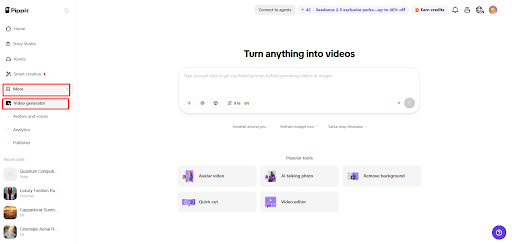
- Open the left vertical menu bar, click “More”, and select “Video generator”.
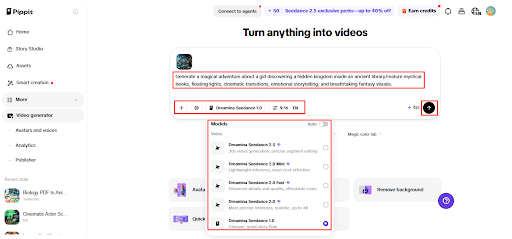
- Pick an AI model including Dreamina Seedance 1.0, Dreamina Seedance 2.0, Dreamina Seedance 2.0 Fast, Dreamina Seedance 2.0 Mini, or Dreamina Seedance 2.5.
- Add a detailed prompt covering visuals, narration, scenes, effects, angles, and format.
- Select video length, language, subtitles, and aspect ratio.
- Click “+” to upload reference images or videos from your device, phone, Dropbox, or a link.
- Click “Generate” to create your faceless video.
 Step 2: Automate video creation
1. Pippit’s AI video generator creates a movie based on your prompt and reference media.
2. The AI manages transitions, pacing, captions, avatars, voice, lyrics, and visual enhancements.
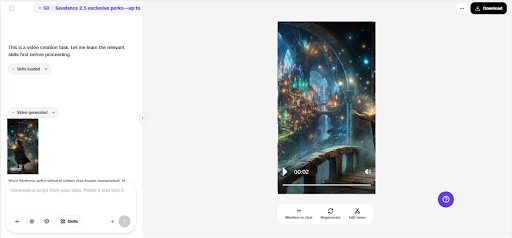
3. You receive a movie draft for review.
Step 3: Optimize and publish
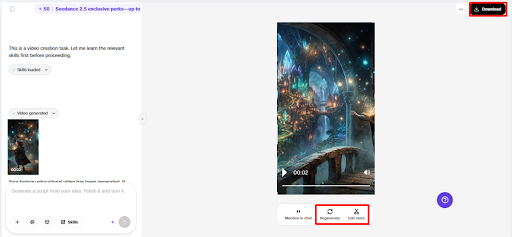
- Use “Download” to save your video, choose “Regenerate” for another version, or click “Edit more” for further editing.
- Adjust captions, text, size, color, alignment, filters, and effects.
- Add background music, remove backgrounds, and enhance visuals.
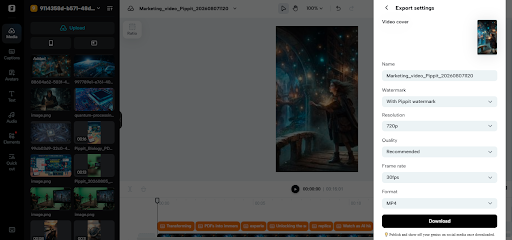
- Click “Export” after final edits.
- Select “Publish” to share on TikTok, Instagram, or Facebook, or use “Download” to save your preferred settings.
Content Formats That Work Well for Faceless Video Channels
There are a number of formats that work for faceless channels as they rely on information and storytelling. Educational explainers can mix narration with diagrams, stock media, illustrations, and additional images. Informative list videos can be used to break up research into easy-to-follow chunks with good pacing. Narration, music, imagery from film, and memorable text can be used in motivational storytelling. Animated tutorials are those that teach software, processes, concepts, or practical tasks without the presence of presenters. Short-form informational videos can provide focused answers with captions and fast-paced changes. Choose formats according to the audience’s purpose, the production’s resources, and the platform’s characteristics.
AI Workflow Components That Improve Content Efficiency
A reliable workflow consists of parts that enable speed, clarity, and consistency:
- Prompt creation defines the structure of the scene, its characters, the direction of the camera, and visual style.
- Reference media provides more visual context and continuity for AI.
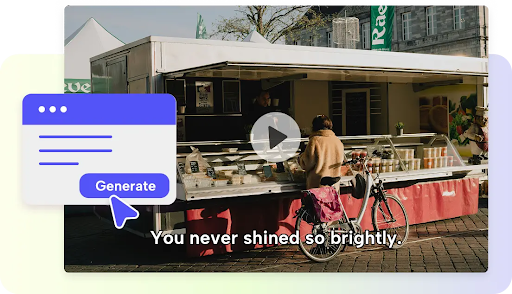
- Auto captions make the video more accessible and help viewers follow the spoken information.
- Visual effects include movement, transitions, emphasis, and cinematic presentation.
- Narration is accompanied by background music, which can enhance the emotional pacing.
- High-resolution export maintains the visual quality on all supported publishing platforms.
Using Pippit’s Editing Tools to Maintain Professional Consistency
Editing takes an AI-generated draft and makes it a more refined final product. Pippit allows creators to tweak captions, typography, colors, filters, alignment, transitions, and effects. The typography is uniform, making it easier for viewers to recognize repeated content and enhancing readability. Transitions should be smooth and aid the flow of the narrative, rather than detract from key information. Color can be adjusted to fit scenes to the channel’s branding and standards. Some objects or distracting elements can be removed to enhance the viewers’ focus. Go through each sequence prior to publication. Carefully review generated text and spoken claims, faces, hands, and visual continuity. Also, you can utilize Pippit’s ad maker to produce appealing and sales-enhancing adverts.

Preparing Videos for Multiple Platforms Without Extra Editing
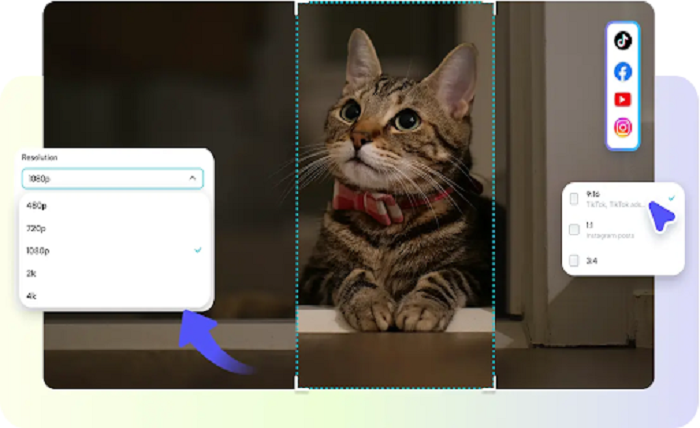
Multi-platform publishing is easy because of adaptable dimensions and consistent branding. We have some automatic cropping tools that can help you prep content for different aspect ratios with Pippit. Vertical video is ideal for Instagram Reels, TikTok, and YouTube Shorts. For many videos on YouTube, a wider format is the appropriate one. The export settings should conform to the technical specifications and quality standards of the platform at the time of export. Make sure logos, captions, and other critical content remain in safe zones. This will help to remove any unwanted cropping between displays. The same template can be used and keep the same fonts, colors, captions, and branding from version to version. Organized filenames, descriptions, thumbnails, and upload assets also lead to improved publishing.
Long-Term Workflow Practices for Sustainable Content Production
It is more important to have disciplined systems than automation for long-term growth. Keep reusable logos, fonts, music, prompts, reference media, scripts, and templates in organized folders. Observe and modify prompts as necessary when patterns of weaknesses become evident in outputs. Check all created videos for errors in fact, unnatural voiceover, repetitive imagery, and mismatching branding. Repeatable tasks should be automated. Topics should be selected, and final presentation should be guided by creative judgment. Research, scripting, generation, editing, review, and distribution can all be part of a practical routine. Pippit can help this routine in that it can minimise the friction between generation and post-production. Frequent assessments can identify areas for improvement in topics, format, openings, and pacing.
Conclusion
Managed and repeatable faceless video production is possible with a structured AI workflow. Pippit is an AI video generator, editor, effects, captioning, and export tool. Creators can create systems that can be reused and have control over the storytelling and quality. But careful review is still necessary, as automation doesn’t replace fact-checking or creativity: organised assets, good prompts, consistent branding, and regular publishing aid efficient channel operations. From concept to editing, optimization and export, Pippit’s workflow provides the solution.